
“Commercialisation of the SG100 is coming closer,” says Standard Gas’ Chief Operating Officer, Laurence Sharrock. “Recently, leading engineering consultant, DNV, judged our plant to be at Technology Readiness Level (TRL) 7, and we’re further encouraged by projects developing in North Norfolk that could see the existing SG100 and potentially two more units at the same location providing clean power to other businesses. In total, our current near-term project pipeline includes 18 plants at 6 sites in the UK and Europe, with a further 9 plants at five sites in the medium term.”
Having observed a plant run back in May, DNV’s subsequent report stated:
“The Technology Readiness Level (TRL) for the SG100 based on completion of the Witness Run is considered by DNV to. be TRL 7, based on the TRL guidance as per the U.S. Department of Energy Technology Readiness Assessment Guide DOE G 413.3-4. At this level, the system has been demonstrated in a relevant operational environment with a near-final configuration but requires operational optimisation and further performance testing to resolve residual technical and operational uncertainties to achieve TRL 8-9. The SG100 is therefore considered pre-commercial, but within process optimisation.”
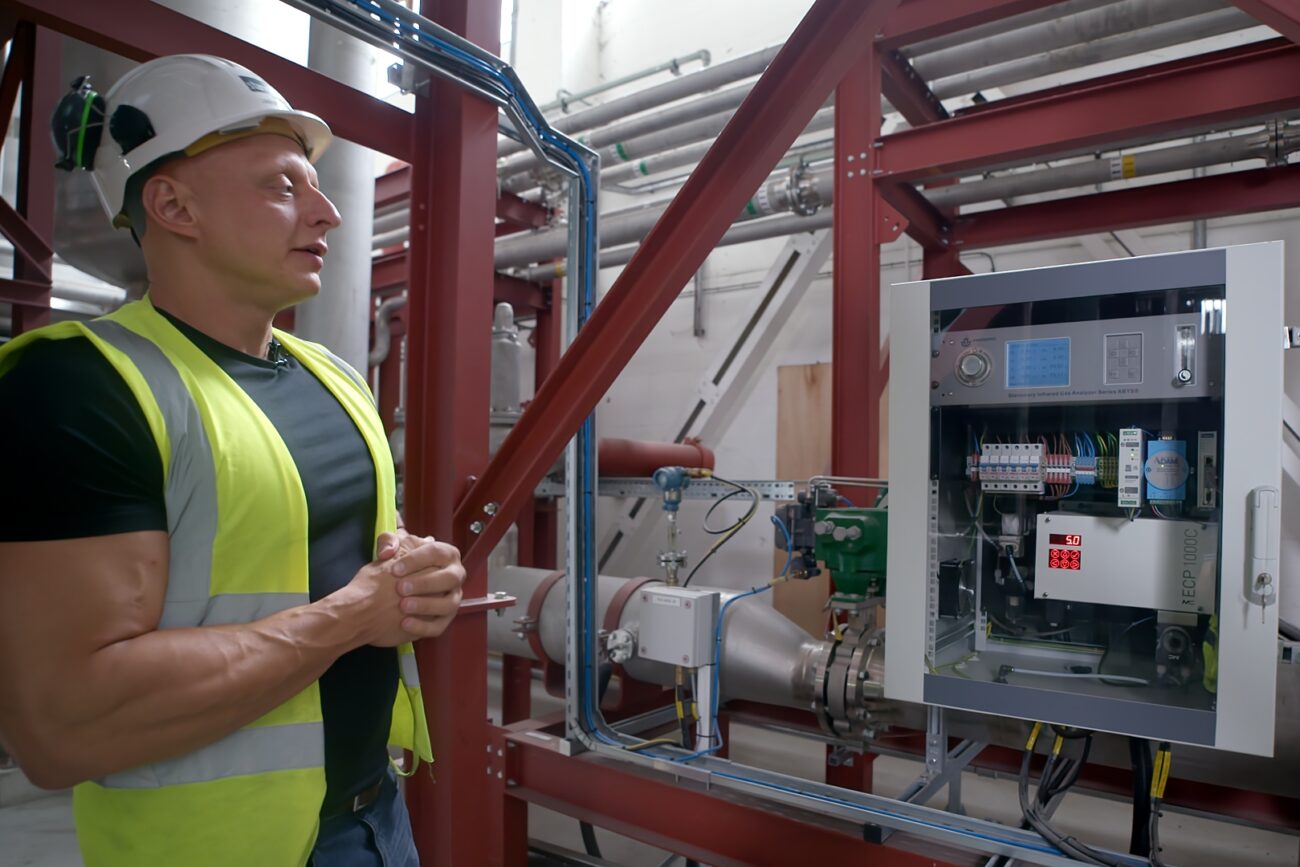
Since DNV’s visit, more plant runs have enabled Standard Gas’ operating team to make further progress in terms of operational optimisation and the goal of TRL 8. “These runs highlight any operational wrinkles and indicate where design tweaks can be implemented. While you always hope a design will be perfect, operating a first-of-a-kind plant towards optimisation shows it rarely is,” notes Laurence.
To better explain where TRL 7 positions the SG100, Laurence points to definitions from UK Research and Innovation, a public body sponsored by the UK’s Department for Business, Innovation, Science and Trade. “According to UKRI, TRL 7 means a new technology has been shown to work in an operational environment. Our goal now is to achieve TRL 8, which means a technology has been completed and qualified through testing and demonstration, then move to TRL 9 – the highest level – by successfully operating multiple plants.”
So, what is required to move the SG100 from TRL 7 to TRLs 8 and 9? DNV’s report offers a precise summary:
The transition from TRL 7 to TRL 8-9 requires demonstration of:
- System reliability and availability over extended operating periods
- Performance stability under a full range of expected operating conditions
- Repeatability and consistency across multiple units or deployments
- Manufacturing readiness and quality control at commercial scale
- Integration into full system architecture and operational interfaces
“A real plus from DNV’s report was that it independently considered the SG100 to have ‘credible technical functionality’ providing ‘a clear pathway to commercialisation.’ So now as we reach for TRLs 8 and 9, we need to demonstrate operational consistency,” says Laurence. “That means longer runs, varied feedstocks, amassing operating data and proving repeatability. Happily, we have an outstanding operations team which now has a wealth of plant knowledge and operating experience, and which is delivering continuous improvements in the SG100’s performance.”